
Why Massage Sits Inside a Chiropractic Plan
Tense or spasmed tissue resists correction — it pulls a joint back toward the position it just came from. Massage immediately before an adjustment reduces that resistance, so the correction is more likely to hold between visits.
That’s the mechanism. Not relaxation, not a complementary add-on — a specific effect on how long your adjustment lasts.
What a Session Is Built Around
Every session targets tissue your evaluation identified: tight, spasmed, or restricted muscle around a problem joint, or the soft-tissue damage left by an injury or repetitive strain. Our licensed therapists work from the same case notes as your chiropractor. If a technique isn’t contributing to your plan, it isn’t in the session.
Secondary effects — improved circulation, reduced muscle tension, less anxiety — are real and commonly reported. They’re not why the session is scheduled.
Cupping Therapy: A Massage Add-On
Cupping is offered within a massage session for muscle tension and soft-tissue restriction. See cupping therapy for how it works and what to expect.
Therapeutic massage is one part of our chiropractic services. For scar tissue and chronic restriction, instrument-assisted soft tissue mobilization (IASTM) is often paired with massage, and electrotherapy can be added for muscle spasm.
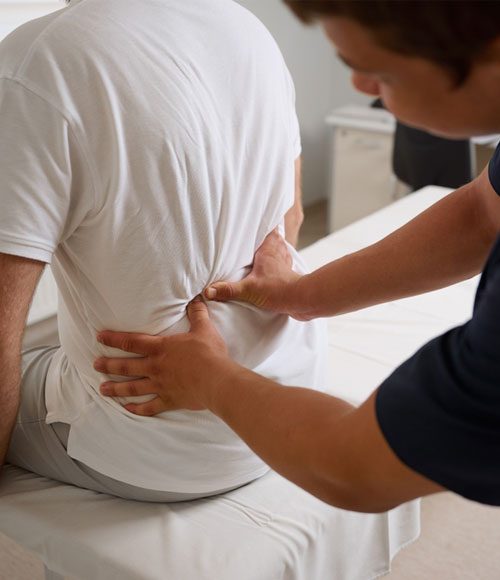
What Happens at Your First Visit
We ask what happened, when symptoms started, and what makes them better or worse. Then we examine.
Para Español
Contamos con personal que habla español. Dígalo cuando llame al (541) 343-3477 y lo atenderemos en su idioma.
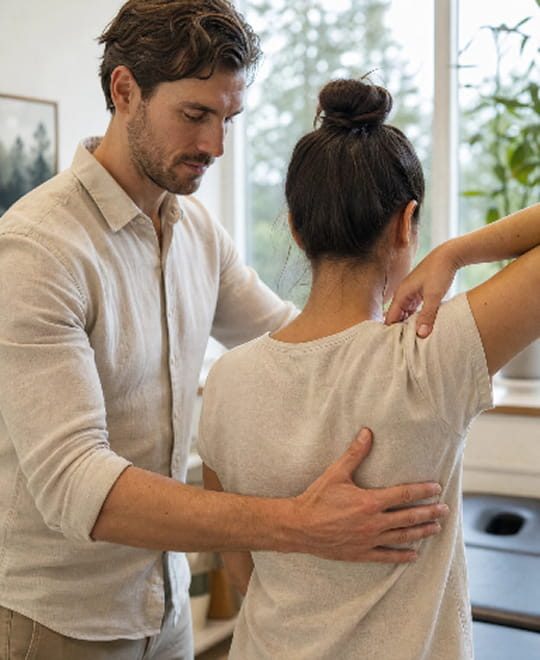
Why Choose Aspen Chiropractic
- The same care team every visit. You aren’t handed to a different provider each time, which matters most on a long claim.
- Insurance handled in house. You open the claim; we take the billing, documentation, and communication from there.
- Evaluation before technique, every time. We don’t guess at the cause. We assess for it, then choose the method the findings support.
- A full team under one roof. Two Doctors of Chiropractic, five licensed massage therapists, and three certified chiropractic assistants.
Meet the Aspen care team — the doctors and staff you’ll see at every visit.
What Our Patients Say
See why patients trust us for compassionate, personalized care and recovery.


Frequently Asked Questions
Is massage therapy better than chiropractic care, or do I need both?
Neither replaces the other. Massage works on soft tissue — muscles, tendons, fascia. Chiropractic adjustment works on joint motion and nerve function. Pairing them usually gets more out of both than choosing one, which is why we schedule massage alongside your adjustment plan rather than as a separate track. Tense, spasmed muscle resists correction; loosening it first gives the adjustment more to work with. Your evaluation determines whether you need one, the other, or both.
Why does Aspen pair massage with chiropractic adjustments?
Because loosening the muscle first changes how the adjustment holds. Tense or spasmed tissue resists correction and pulls the joint back toward its old position. Massage immediately before an adjustment reduces that resistance, so the correction is more likely to hold between visits. That’s why the two are scheduled as one visit when your plan calls for both.
Is the massage therapy at Aspen clinical or relaxation-focused?
Clinical. Every session is built around a treatment goal your evaluation identified, ordered by what your muscles and joints need that week, and documented alongside your chiropractic care. Our licensed therapists work from the same case notes as your chiropractor. If a technique isn’t contributing to your plan, it isn’t included.
What conditions does therapeutic massage address?
Muscular pain and soft-tissue dysfunction — the tight, spasmed, or restricted tissue that develops around an injury or from repetitive strain. It’s used to relieve pain in the muscle and tissue surrounding a problem joint, and over time it reduces the likelihood of the same issue recurring. We don’t book it as a stand-alone service; it’s ordered as part of your broader plan.
Does massage therapy help with circulation and stress, not just pain?
Yes — the effects extend past pain relief. Massage improves circulation, supports muscle relaxation, and is associated with reduced anxiety alongside relief from specific types of muscular pain. Those effects are secondary to the clinical goal rather than the reason the session is scheduled, though they’re commonly noticed. If stress or circulation is a concern separate from your injury, mention it when you book — (541) 343-3477 — and we’ll factor it into the evaluation.
Schedule an Evaluation
Call (541) 343-3477 or schedule online. We’ll tell you what we find and what we’d do next.
Accident patients: open your insurance claim first, then call with the claim number.